

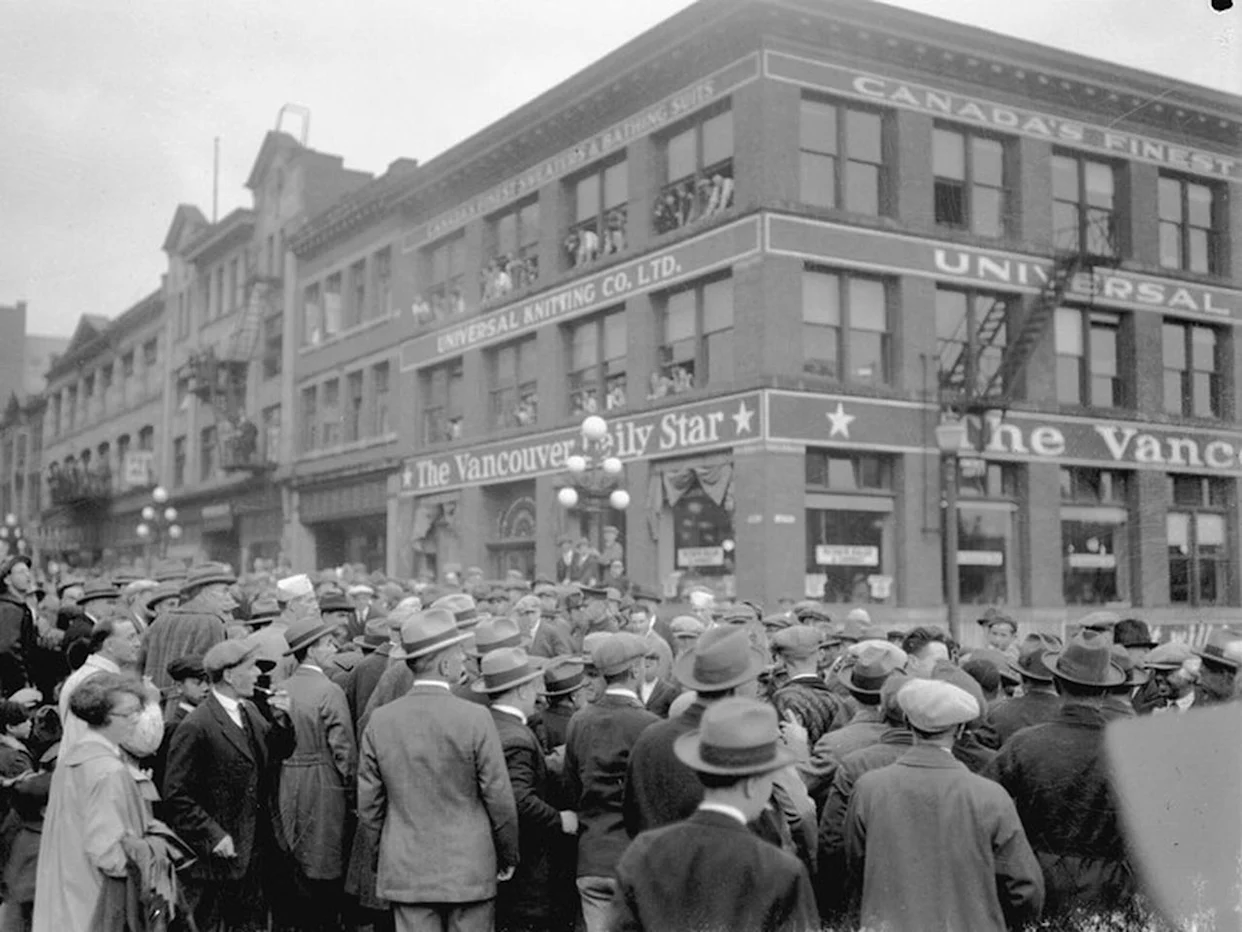
In the first half of the 20th century, Vancouver was changing fast. Streets were filling up, longshoremen worked the docks from dawn to dusk, and alongside the growing city lived the Musqueam, Squamish and Tsleil-Waututh communities, who continued their own traditions. Back then, clothing said more about a person than any official record. It wasn’t hard to spot Vancouverites in wool coats and simple dresses that had become popular after the First World War. On worksites, you’d see fishers, loggers and dockworkers in flannel, warm jackets and waxed raincoats — gear that could survive endless rain. In nearby communities, Coast Salish weavers worked with cedar bark and mountain goat wool, creating capes and woven blankets that carried family stories.
This article brings you back to that period and shows how clothing across the region from 1900 to 1950 reflected the lives of city workers, labourers and Indigenous communities. No embellishments — just real details. It’s a story about people, their work, daily routines and the traditions that endured despite rapid change. Read more on vancouveranka.
Historical Context
Vancouverites were used to constant rain and wind. People stepped outside in wool coats, thick sweaters and hats that kept out the damp. On the docks, fishers checked their nets, shifted crates of fish and wiped off the spray that hit their waxed jackets and rubber boots. Loggers prepped axes and saws, wearing flannel shirts and warm wool jackets to guard against the forest’s chilly moisture. The ports rarely slept, and dockworkers relied on overalls and leather boots that could withstand tough physical work.
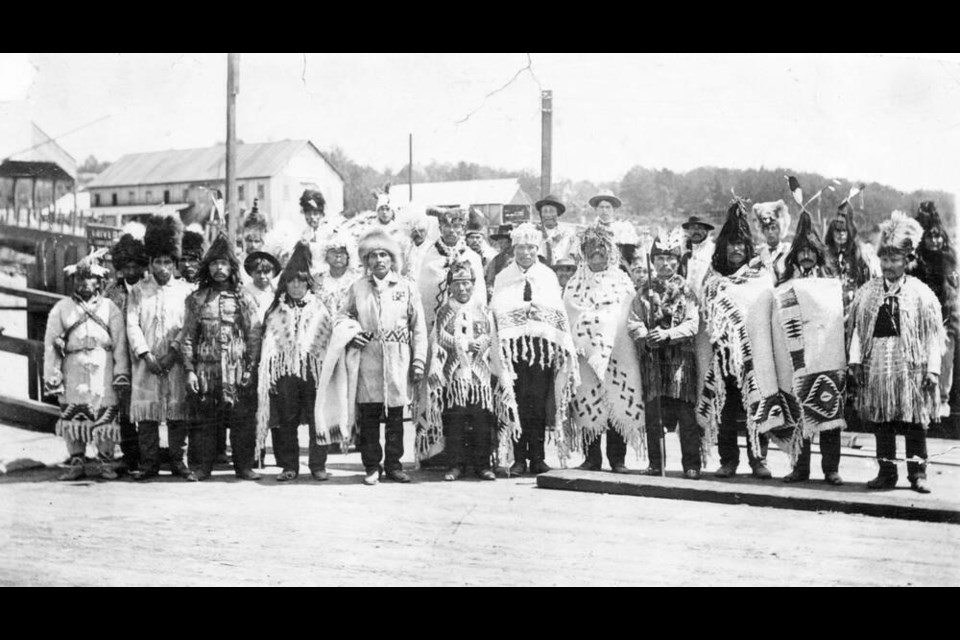
In the same areas lived the Musqueam, Squamish and Tsleil-Waututh peoples. Weavers created capes and blankets from cedar bark and mountain goat wool. Skirts and ceremonial regalia were passed down through generations. Each cape carried the history of a family and community while also being practical — offering protection from wind and rain, especially during long walks or work near the river.
European and American fashions also shaped everyday life. City shops sold coats, dresses, hats, suits and shirts inspired by British styles. People chose clothing not only for warmth or comfort but also to meet social expectations and professional standards. Women often wore long dresses and wool coats, while men wore suits and shirts — though tougher fabrics were the norm for dock and forest work.
Colonial policies and assimilation efforts left a strong mark. In residential schools, Indigenous children were forced to wear European clothing, which reduced the use of traditional garments in daily life. Still, during ceremonies and gatherings, woven blankets, capes and regalia preserved their meaning and carried family history.
Clothing revealed a lot: a person’s profession, status and community ties. The streets, ports, forests and Indigenous villages together formed a vivid portrait of regional life. Each garment had a practical purpose and also told a story about a person’s role in the world around them.
City Clothing in European and Immigrant Communities
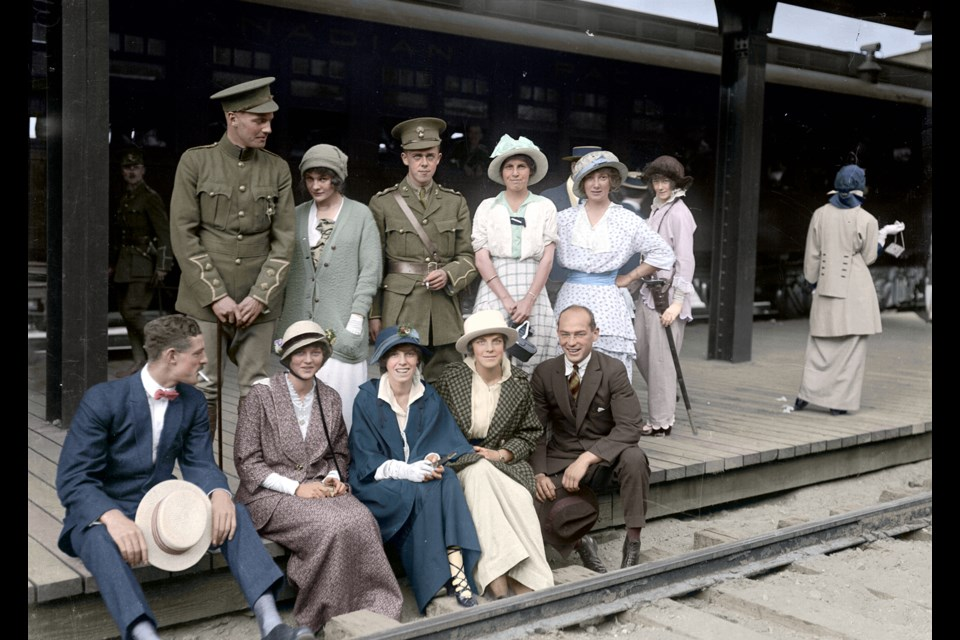
At the start of the century, British styles shaped the look of the city. Women wore long dresses with corsets that emphasized the waist, along with coats featuring broad collars. Hats were large, often decorated with feathers or ribbons. Men favoured suits with vests, high-collared shirts and ties, sometimes paired with top hats or felt hats. Most fabrics were wool — dense and warm enough to handle the wind and rain.
Between 1910 and 1920, clothing became simpler. Dresses grew shorter, coats less bulky, and waterproof rainwear became more common. Women switched to more practical hats, while men chose lighter suits. The rise of factory-made fabrics made everyday clothing easier to produce and more comfortable to wear.
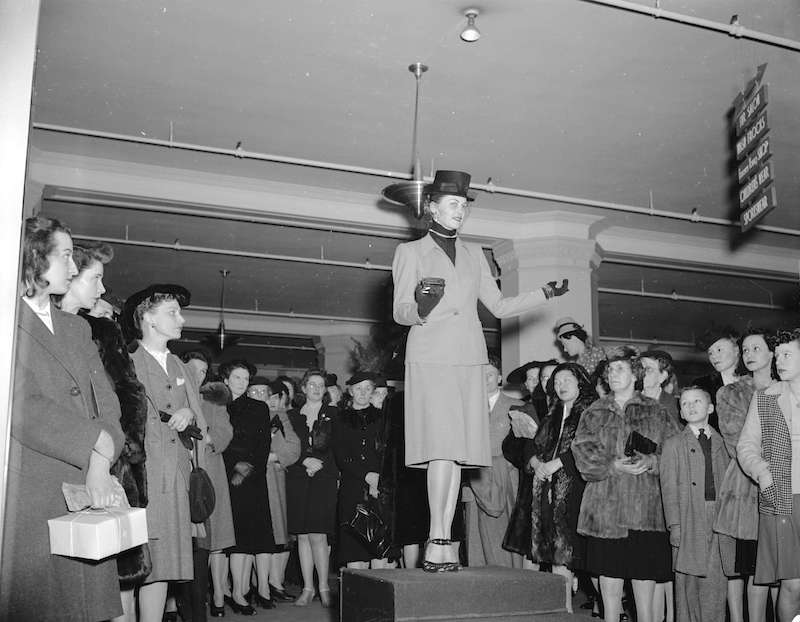
By the 1920s and 1930s, fashion magazines introduced modern cuts to Vancouver. Dresses became shorter still, with straighter lines. Men’s suits took on a cleaner, simpler silhouette, though coats remained heavy because of the climate. Clothing grew more comfortable for walking around the city, working in shops or riding streetcars.
Later, Hollywood and European tailoring influenced local style. Women wore dresses with sharper shoulders and refined collars. Men chose suits with wider lapels. Coats stayed essential but began to feature more decorative details — buttons, belts, cuffs. Fabrics remained heavy and wool-based, though lighter cotton options slowly appeared for summer wear.
In the 1940s and early 1950s, military-inspired fashion shaped everyday looks. Men’s suits and coats borrowed from uniform cuts, while women’s dresses became plainer, with fewer embellishments as fabric was rationed.
Workwear
For work on the docks, fishing grounds or in the forest, practicality came first. Clothing was made from flannel, heavy cotton and wool. Sweaters were thick and high-necked to block wind and cold.
Fishers wore waxed jackets and slickers, rubber boots and storm hoods — essential in constant rain and saltwater spray. In fishing villages, wool sweaters and coarse trousers were popular because they dried quickly and kept warmth even when damp.
Dockworkers relied on overalls, leather boots and protective vests. Their clothing was sturdy, often reinforced with double stitching to withstand heavy crates and ropes. Many wore leather gloves to avoid cuts and cracked hands.
Loggers chose wool shirts, leather gloves and sturdy Mackinaw jackets that held heat even in wet forests. Their boots were thick-soled and durable, built for muddy ground and rocky hillsides.
Over time, this workwear became part of the region’s identity. On the docks, in the forest and in the ports, people recognized each other by their jackets, boots and fabrics. This wasn’t just clothing — it was survival gear for a harsh coastal climate.
Traditional Clothing of Indigenous Peoples
The Musqueam, Squamish and Tsleil-Waututh communities created clothing directly from the land. They used cedar bark and mountain goat wool, and historically, wool from the Salish wool dog. Cedar bark was cleaned, cut into thin strips and softened, while wool was spun by hand and dyed with natural pigments — reds from roots, yellows from bark, dark tones from leaves and berries.
The weaving techniques were complex. Twill weaving, for example, created fabric that was strong, dense and surprisingly light. Each cape or blanket carried patterns that indicated family lineage, community identity and social status. Everyday capes and blankets were worn regularly, while ceremonial versions were saved for gatherings. Skirts, capes and headpieces formed part of regalia, with each element holding cultural meaning.
By the early 20th century, traditional clothing was worn less often in daily life. Many items remained reserved for ceremonies and important events. Younger generations wore European clothing in schools and workplaces, yet woven blankets, capes and regalia continued to preserve cultural knowledge.
Impact of Global Events
The First World War reshaped men’s fashion in the city: suits and coats became standardized, fabric was used sparingly, and silhouettes grew cleaner and more restrained. In the 1930s, the Great Depression simplified clothing even further — people made garments from affordable materials and avoided unnecessary decoration. Coat and dress patterns became as practical as possible.
The Second World War introduced military elements into everyday fashion. New technologies also appeared — lighter wool fabrics and synthetic blends that retained warmth and resisted rain.
Residential school policies deeply affected Indigenous communities. Children were required to wear European clothing and barred from wearing their traditional capes and woven blankets. This disrupted the generational transfer of weaving traditions in everyday life. Even so, ceremonial garments continued to be created and used within communities, preserving a vital cultural foundation.
Postwar changes laid the groundwork for 1950s fashion. Clothing remained practical and easy to care for, while silhouettes became more comfortable for daily work and home life. Meanwhile, Indigenous communities continued to use traditional capes and woven blankets during important events, ensuring weaving knowledge passed to future generations.
Sources:
- https://ywcavan.org/blog/2025/06/living-threads-coast-salish-wool-weaving
- https://www.donsmaps.com/pacificnwclothingmasks.html
- https://ied.sd61.bc.ca/wp-content/uploads/sites/112/2019/02/Coast_Salish_Connecting_Art_Enviornment__Traditions_Lessons.pdf
- https://thetyee.ca/News/2018/04/11/Musqueam-UBC-Learning